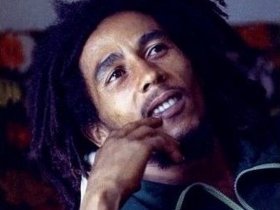

Before the group there was a single. In 1962 a teenage Robert Nesta Marley cut “Judge Not” for producer Leslie Kong; when it appeared in Britain the following year the label credited it to “Bob Morley,” Ultimate Classic Rock notes. It did not sell. What came next did.
Joe Higgs’s yard
In Trench Town, Bob Marley, his friend Neville “Bunny” Livingston (Bunny Wailer), Winston “Peter Tosh” McIntosh, Junior Braithwaite and Cherry Smith formed a vocal group they called the Teenagers. The singer Joe Higgs, half of Higgs & Wilson, drilled them in breath control and harmony in his kitchen and in a neighbour’s yard, the Wailers Recording Session Timeline records; the group rehearsed for close to two years before entering a studio. Beverley Kelso, a young singer from the area, joined on the eve of the first session.
13 Brentford Road
The five of them — Marley, Livingston, Tosh, Braithwaite and Kelso — walked into Clement “Coxsone” Dodd’s Studio One at 13 Brentford Road with four songs: “Simmer Down,” “I Don’t Need Your Love,” “How Many Times” and “Straight and Narrow Way,” the Gleaner reports. Kelso, who dated the session to late 1963, recalled it to the paper decades later: “After we rehearsed, under this big mango tree on Second Street in Trench Town, the next morning … we went to Studio 1 and recorded Simmer Down and some other songs. Syd Bucknor was the engineer, and Coxsone was also there along with Roland and Jackie Mittoo. We recorded Simmer Down about 10 times.” The Wailers’ own session chronology places the first Studio One date at July 1964; the Gleaner, drawing on Kelso and Bunny Wailer, puts the hit at No. 1 in early 1964. What is not in dispute is who played: the Skatalites.
“Simmer Down” was a message to the rude boys of west Kingston to cool the violence — delivered, the Recording Academy observes, over the Skatalites’ “spirited horn-led intro, thumping jazz-infused bass and fluttering sax solo.” It went to No. 1 in Jamaica and, per Reggae Vibes, held the top spot in February 1964. Dodd paid the group £20 a song, to be split five ways, according to the session timeline. They never received royalties from the Studio One recordings.
Becoming a trio
A second No. 1, “It Hurts to Be Alone,” was led by Braithwaite — who then emigrated to the United States with his family in 1964. Kelso left around the same time. By mid-to-late 1964, the Gleaner records, the Wailers were Bob, Peter and Bunny, with Marley as lead singer on Dodd’s instruction. Over two years they would record on the order of 100 songs for Studio One — ska, gospel, doo-wop, soul covers and the first version of “One Love” (1965) — and land five songs in the Jamaican Top 10 at once by early 1966, the Recording Academy notes. Their debut album, The Wailing Wailers, appeared in 1965. The same year Kelso introduced a young mother from the neighbourhood, Rita Anderson, to Dodd; she recorded with her group the Soulettes, and on February 10, 1966, married Bob Marley.
Why it matters
Everything that followed — Island Records, London, the National Stadium — rests on a ska record about keeping the peace, cut by teenagers who were paid by the song. The Wailers begin here.
Listen and dig deeper
- Play The Wailing Wailers in the Listen library, and browse Bob Marley, Peter Tosh, Bunny Wailer, The Wailers, Joe Higgs and Coxsone Dodd.
- Next on the timeline: ‘Catch a Fire’ and the Island deal (1973).
Sources: Jamaica Gleaner — “From Wailers to Wailers: The transition of the greatest reggae group ever” (July 29, 2012); Jamaica Gleaner — “Vintage Voices: Bob Marley and the Wailers – From ‘Scratch’ to Coxsone to Island” (Aug 25, 2019); Wailers Recording Session Timeline, 1962–1974; Recording Academy — “Remembering Coxsone Dodd: 10 Essential Productions”; Reggae Vibes — The Wailing Wailers review; Ultimate Classic Rock — “How Bob Marley Broke Out With the Wailers’ ‘Catch a Fire’”.
Editor’s note: This entry is part of the JamaicansMusic online museum — a career timeline assembled from the archive. It is dated to the era it documents; every claim is drawn from the linked sources.