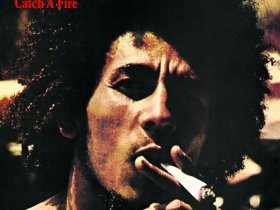

The Wailers reached Island Records because they were broke. After a British tour with Johnny Nash, sessions for Danny Sims’s JAD/CBS operation collapsed in a contractual dispute, and the group had neither the fare home nor a work permit to earn it, the album’s documented history records. Their London road manager, Brent Clarke, pointed them to Chris Blackwell, whose Island label had licensed Wailers singles from Studio One years earlier. Blackwell advanced £4,000 — enough to get Bob Marley, Peter Tosh and Bunny Wailer back to Kingston and pay for an album, bobmarley.com confirms.
Kingston, 1972
They recorded through 1972 on eight-track at three Kingston studios — Dynamic Sound, Harry J’s and Randy’s — with engineer Sylvan Morris. Aston “Family Man” Barrett on bass and his brother Carlton on drums anchored the band; Robbie Shakespeare and Tyrone Downie played on “Concrete Jungle” and “Stir It Up,” Winston Wright played organ elsewhere, and Rita Marley and Marcia Griffiths sang backing vocals. Nine songs: seven by Marley, two — “400 Years” and “Stop That Train” — by Tosh.
Basing Street
Marley flew the tapes to London in the winter of 1972. Blackwell, who had broken Cat Stevens and Traffic and had firm ideas about crossover, remixed the record at Island’s Basing Street studios and brought in two American session players, Ultimate Classic Rock recounts: Muscle Shoals guitarist Wayne Perkins, who added the solo and three-octave feedback on “Concrete Jungle,” slide on “Baby We’ve Got a Date” and the wah-wah lead on “Stir It Up,” and keyboardist John “Rabbit” Bundrick, who added clavinet and synthesizer. Tosh and Wailer chafed. The bass-and-drum core stayed Jamaican.
The Zippo
Catch a Fire was released on April 13, 1973, credited simply to The Wailers. The first 20,000 copies came in a sleeve designed by Rod Dyer and Bob Weiner in the shape of a Zippo lighter, hinged at the side so the record slid out of the case; each had to be riveted by hand, which proved too costly, and later pressings switched to John Bonis’s design around Esther Anderson’s photograph of Marley drawing on a spliff — now credited to Bob Marley and the Wailers. It sold around 14,000 copies in its first weeks and peaked at No. 171 on the Billboard 200.
The tour, and the cost
Nineteen shows in British universities and clubs followed, plus BBC appearances on The Old Grey Whistle Test and Top Gear; then Paul’s Mall in Boston, New York dates alongside Bruce Springsteen’s band and, in October, an opening slot for Sly and the Family Stone in Las Vegas. The UK leg was the last time Bunny Wailer toured with the group; Joe Higgs, their old Trench Town teacher, stepped in. Tosh left after the American dates. Burnin’ — with “Get Up, Stand Up” and “I Shot the Sheriff” — followed before the year was out.
Why it matters
Rolling Stone later placed Catch a Fire at No. 126 on its 500 Greatest Albums list, second only to Legend among reggae records, bobmarley.com notes. David Rodigan called it “quite simply, one of the greatest reggae albums ever made.” It is the record that put Kingston’s music into the racks beside rock albums — on Kingston’s rhythms, with London’s polish.
Listen and dig deeper
- Play Catch a Fire and Burnin’ in the Listen library. Browse Bob Marley, The Wailers, Peter Tosh and Bunny Wailer.
- Previously: ‘Simmer Down’ and the birth of the Wailers (1964). Next: ‘Exodus’ (1977).
Sources: bobmarley.com — Catch a Fire (1973); Ultimate Classic Rock — “How Bob Marley Broke Out With the Wailers’ ‘Catch a Fire’”; Wikipedia — Catch a Fire (recording, release, tour and reception, with cited references); uDiscover Music — “Bob Marley’s ‘Catch A Fire’ Relights With 50th Anniversary Editions” (2023).
Editor’s note: This entry is part of the JamaicansMusic online museum — a career timeline assembled from the archive. It is dated to the era it documents; every claim is drawn from the linked sources.