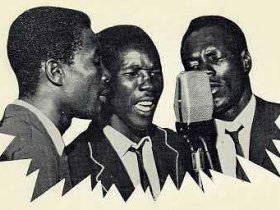
On the night of Sunday, 8 February 2004, at the 47th Grammy Awards in Los Angeles, Toots Hibbert and Toots & The Maytals won Best Reggae Album for True Love, per the Recording Academy. It was Hibbert’s first Grammy after five previous nominations stretching back to 1989 — and the culmination of a comeback that had reunited the Maytals name for festival stages worldwide.
The album
Released in 2004 on V2/Mega, True Love revisited the Kong-era catalogue and Island classics with guest vocalists and guitarists: Eric Clapton on “Pressure Drop,” Bonnie Raitt on “True Love Is Hard to Find,” Willie Nelson and Trey Anastasio among others. The concept — a living legend re-singing his standards with admirers — was straightforward; the execution rested on Hibbert’s voice, still gritted with the same church-and-soul grain the Guardian would praise in 2020. Play True Love in the Listen library.
The field
The 2005 Grammy category page (honouring 2004 releases) lists the nominees: Toots & The Maytals’ True Love, Sean Paul’s Dutty Rock, Shaggy’s Hot Shot, Sly & Robbie’s As Raw as Ever and Yellowman’s Round 1. Toots took the statuette — only the second win of his career on a reggae album, after a long dry spell the Academy’s artist page documents across seven total nominations.
Why it matters
The Grammy validated what Kingston and London had known since the 1960s: Toots Hibbert’s songbook was reggae’s foundation stone. The win opened a late-career chapter of honours, reissues and festival headliner slots that would run until his death in 2020.
Listen and dig deeper
- Play True Love in the Listen library. Browse Toots Hibbert and Toots & The Maytals.
- Previously: ‘Reggae Got Soul’ (1975). Next: The Grammys and reggae’s main stage (2013).
Sources: Recording Academy — Frederick “Toots” Hibbert artist page; Recording Academy — Best Reggae Album, 47th Annual Grammy Awards (2005); The Guardian — “Toots Hibbert obituary” (David Katz, Sep 12, 2020).
Editor’s note: This entry is part of the JamaicansMusic online museum — a career timeline assembled from the archive. It is dated to the events it documents; every claim is drawn from the linked sources.