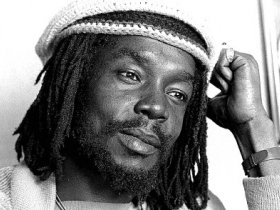
Winston Hubert McIntosh was born in rural Westmoreland in 1944 and came to prominence with the Wailers during the mid-1960s, David Katz records in the Guardian. He moved to Trench Town, Kingston, as a teenager, learned guitar on his own and earned the nickname Peter from his height. On the sound-system circuit he watched Bob Marley and Neville “Bunny” Livingston rehearse; the three would become the core of the Wailers.
Joe Higgs’s yard
The vocal coach Joe Higgs drilled Marley, Livingston and McIntosh in harmony under a mango tree on Second Street, the Wailers Recording Session Timeline records — the same schooling that prepared the group for Coxsone Dodd’s Studio One. Early line-ups included Junior Braithwaite and Beverley Kelso; by 1963 the founding trio of Marley, Tosh and Bunny was in place, AllMusic notes, with Tosh on guitar and Livingston on percussion.
Studio One
At Clement “Coxsone” Dodd’s 13 Brentford Road studio the Wailers cut ska and rocksteady sides that made them Jamaican stars — “Simmer Down,” “Rude Boy,” “One Love” and dozens more. Tosh’s own compositions, including “I’m the Toughest” and “Stop That Train,” signalled a harder, more confrontational voice than Marley’s, the Guardian observes. He also played on sessions for other singers and, with Livingston, backed Marley on tour when the lead singer briefly left for Delaware in 1966.
Why it matters
Before Legalize It, before the Rolling Stones and before the unicycle, Peter Tosh was one third of a group that defined reggae’s transition from ska to roots. The independence he would claim as a solo artist — and the militancy that made him “Stepping Razor” — were already audible in the Studio One years.
Listen and dig deeper
- Play The Wailing Wailers in the Listen library, and browse Peter Tosh, Bob Marley, Bunny Wailer and Joe Higgs.
- Related: ‘Simmer Down’ and the Studio One breakthrough (1964). Next on the timeline: Tosh and Bunny leave the Wailers (1974).
Sources: The Guardian — “At last, Peter Tosh gets a museum of his own” (David Katz, Nov 7, 2016); AllMusic — Peter Tosh biography; Wailers Recording Session Timeline, 1962–1974; Jamaica Gleaner — “From Wailers to Wailers” (July 29, 2012).
Editor’s note: This entry is part of the JamaicansMusic online museum — a career timeline assembled from the archive. It is dated to the era it documents; every claim is drawn from the linked sources.