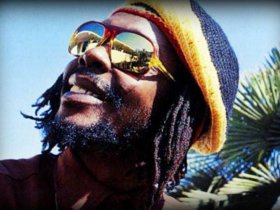

No Nuclear War, Peter Tosh’s final studio album, was released in 1987 on EMI — months before he was murdered at his Kingston home on 11 September 1987, the Washington Post and UPI reported. The title track and companion songs “Nelson Mandela,” “Vampire” and “Come Together” carried the same anti-war, anti-apartheid message he had preached since the Wailers years. At the 30th Annual Grammy Awards (1988), the album won Best Reggae Recording, per the Recording Academy.
The last statement
Produced by Tosh and Geoffrey Chung, No Nuclear War found the Stepping Razor facing the Cold War’s final decade with characteristic bluntness. “No nuclear war — no more war,” the title song pleaded. “Nelson Mandela” demanded freedom for the imprisoned ANC leader. The set was lean — eight tracks, under 35 minutes — but unmistakably Tosh: militant, biblical, unwilling to moderate, AllMusic notes. Discogs lists the 1987 EMI pressing (EMS-1723).
The Grammy
The Grammy arrived posthumously. Tosh did not live to collect it; he was killed during a home invasion in Kingston on 11 September 1987, aged 42, UPI reported. The award — his first Grammy — recognised a career that had spanned ska, rocksteady and roots reggae, from Studio One to CBS, Rolling Stones Records and EMI. The New York Times obituary called him “one of reggae’s most influential figures” and singled out “Legalize It” and “Equal Rights” alongside the late work.
Why it matters
No Nuclear War is both epilogue and testament. Tosh’s last album won the industry’s top reggae prize; his last months were spent saying what he had always said — only louder.
Listen and dig deeper
- Play No Nuclear War and Mama Africa in the Listen library, and browse Peter Tosh.
- Previously: Mama Africa (1983). Next: Murdered in Kingston (1987).
Sources: Recording Academy — 30th Annual Grammy Awards; The Guardian — “At last, Peter Tosh gets a museum of his own” (David Katz, Nov 7, 2016); The New York Times — “Peter Tosh, 42, Reggae’s Star” (Jon Pareles, Sep 13, 1987); AllMusic — No Nuclear War review; Discogs — No Nuclear War master release.
Editor’s note: This entry is part of the JamaicansMusic online museum — a career timeline assembled from the archive. It is dated to the era it documents; every claim is drawn from the linked sources.