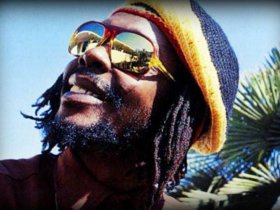

Equal Rights, Peter Tosh’s second CBS album, landed in 1977 — a year after Legalize It and the same year Bob Marley released Exodus. Where Marley was building a crossover audience, Tosh doubled down on confrontation. AllMusic calls it “one of the best reggae albums ever made” — a set that demanded equal rights and justice for black people the world over.
The songs
The title track opens with a challenge: “Everyone is crying out for peace / None is crying out for justice.” “African” declares diaspora identity — “Don’t care where you come from / As long as you’re a black man, you’re an African” — while “Downpresser Man” reprises the Perry-era warning that oppressors will face judgment. Tosh reclaimed “Get Up, Stand Up,” which he had co-written with Marley in the Wailers years, as a solo statement, per AllMusic. The album also carried “Steppin’ Razor,” the song that gave him his nickname, and “Apartheid,” a direct attack on South Africa’s regime.
The sound
Again working with Joe Gibbs and Sly & Robbie, Tosh kept the arrangements lean and the vocals forward. Discogs lists the 1977 CBS pressing (PC 34662) and subsequent reissues on Rolling Stones Records and other labels. The New York Times obituary singles out “Equal Rights” and “Legalize It” as the albums that “established him as a major reggae figure.”
Why it matters
If Legalize It announced Tosh’s solo arrival, Equal Rights defined his politics — pan-African, Rastafarian, anti-colonial and utterly explicit. The Stepping Razor was no longer a Wailers sideman with something to prove; he was a prophet with a record contract.
Listen and dig deeper
- Play Equal Rights and Legalize It in the Listen library, and browse Peter Tosh.
- Previously: Legalize It (1976). Next: Bush Doctor and the Rolling Stones (1978).
Sources: The Guardian — “At last, Peter Tosh gets a museum of his own” (David Katz, Nov 7, 2016); AllMusic — Equal Rights review; Discogs — Equal Rights master release; The New York Times — “Peter Tosh, 42, Reggae’s Star” (Jon Pareles, Sep 13, 1987).
Editor’s note: This entry is part of the JamaicansMusic online museum — a career timeline assembled from the archive. It is dated to the era it documents; every claim is drawn from the linked sources.