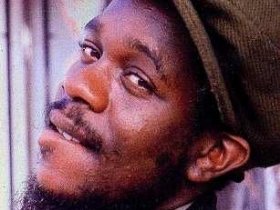
Dennis Emmanuel Brown was born in Kingston on 1 February 1957 and raised near Orange Street, the National Library of Jamaica records — within walking distance of the studios that defined reggae. By nine he was billed as the “boy wonder-singing sensation,” hoisted onto beer crates to sing with Byron Lee and the Dragonaires, the Guardian obituary notes. At eleven he scored his first hit with a cover of the Van Dykes’ “No Man Is an Island.” The route from there was the one Marley had taken: Studio One on Brentford Road.
Signing with Coxsone
Around 1970 Brown signed to Clement “Coxsone” Dodd’s Studio One operation, Trojan Records recounts. He recorded his version of “No Man Is an Island” — a song he had first worked on with Derrick Harriott — and over the next year cut a series of sides for Dodd. The sessions were crowded with the singers who defined the label: Horace Andy, Errol Dunkley, the Heptones, Delroy Wilson. Alton Ellis taught him guitar, Brown recalled in 1979: “He was the first person who told me that I should learn to play an instrument because it would assist me in getting my music together more.”
Two albums in two days
In a two-day session presided over by Dodd, the young Brown recorded the material for No Man Is an Island and If I Follow My Heart, the Guardian records — albums that, in the paper’s words, “confirmed him as Jamaica’s own Michael Jackson.” Tracks were laid down during 1969 and 1970, when Brown was twelve or thirteen, per Wikipedia and Downbeat Special. Original compositions from the period include “Created by the Father,” which critics have called one of his most enduring songs.
Why it matters
Studio One was where reggae royalty was minted — Burning Spear, Toots and the Maytals, Bob Marley. Brown’s apprenticeship there gave him the vocal discipline and studio fluency that would sustain a career of more than seventy-five albums. He would soon move on to other producers, but the Coxsone foundation never left his voice.
Listen and dig deeper
- Play No Man Is an Island and If I Follow My Heart in the Listen library, and browse Dennis Brown.
- Next on the timeline: Child prodigy and “No Man Is an Island” (1969).
Sources: The Guardian — “Dennis Brown” (Dotun Adebayo, Jul 2, 1999); National Library of Jamaica — Dennis Brown exhibition; Trojan Records — Dennis Brown biography; Wikipedia — No Man Is an Island (album); Downbeat Special — No Man Is an Island discography.
Editor’s note: This entry is part of the JamaicansMusic online museum — a career timeline assembled from the archive. It is dated to the era it documents; every claim is drawn from the linked sources.