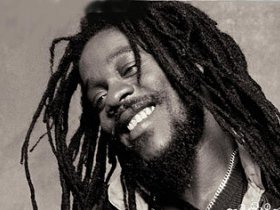

By the time Dennis Brown walked into Studio One to cut “No Man Is an Island,” he was already being billed as “the boy wonder singing sensation,” NPR records. He was eleven. The single — a cover of the Van Dykes’ 1964 American hit, which Brown had first worked on with Derrick Harriott — swiftly became the first of a run of significant Jamaican hits for the singer, Trojan Records notes.
The debut album
The title track anchored Brown’s debut album No Man Is an Island, recorded during 1969 and 1970 at Studio One under Clement “Coxsone” Dodd and issued circa 1970–72, per Wikipedia and Discogs. The National Library of Jamaica places the album in 1970, when Brown was thirteen. Alongside the title song, the set includes Brown originals such as “Created by the Father,” “Going to a Ball” and “Your Love Is Amazing” — remarkable compositions from a child barely into his teens.
A voice beyond his years
What astonished listeners then still astonishes now: Brown sounded fully formed at twelve or thirteen. Discogs collectors note that you would not believe his age listening to the sessions. The Jamaica Observer calls No Man Is an Island (1970) an album that “encapsulated the foundation ‘one drop’ sonic of reggae music.” The child prodigy was no novelty act. He was a recording artist with a career ahead of him measured in decades.
Why it matters
“No Man Is an Island” was the door. Every producer on the island would soon be knocking — Phil Pratt, Lloyd Daley, Augustus Clarke, Joe Gibbs. But the song fixed Brown’s identity before his voice had even broken: a singer of grace, precision and preternatural maturity.
Listen and dig deeper
- Play No Man Is an Island in the Listen library, and browse Dennis Brown.
- Previously: Coxsone and Studio One (1968–1970). Next: The Crown Prince of Reggae.
Sources: NPR — “Dennis Brown: The ‘Crown Prince’ Of Reggae” (Apr 26, 2010); Trojan Records — Dennis Brown biography; Wikipedia — No Man Is an Island (album); National Library of Jamaica — Dennis Brown exhibition; Jamaica Observer — “Happy birthday Dennis Brown!” (Feb 1, 2020).
Editor’s note: This entry is part of the JamaicansMusic online museum — a career timeline assembled from the archive. It is dated to the era it documents; every claim is drawn from the linked sources.