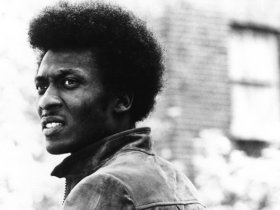
James Chambers was born in Somerton, St James, on 1 April 1948, the Independent records — and by his early teens he had renamed himself Jimmy Cliff, after the heights he intended to scale. He left the countryside for Kingston, fell in with the sound-system world, and began knocking on producers’ doors. Beverley’s Record Centre on Orange Street was where Leslie Kong and his brothers ran a shop that would become one of the island’s most important labels.
The audition
Cliff’s first approach did not go as planned. As Derrick Morgan later recalled to the Jamaica Gleaner, Kong sent the unknown singer to Morgan’s house for a test. Cliff sang “Dearest Beverley,” a slow ballad he had written to win the producer’s favour — and Morgan told him it would not fly in the current market. Cliff had another song ready: “Hurricane Hattie,” a witty warning to a misbehaving girlfriend, framed by the deadly 1961 Atlantic cyclone that had threatened Jamaica before veering toward British Honduras. Morgan approved; Cliff brought him to Kong, and a session was booked at Federal Studios.
Number one
Caribbean Beat’s history of Kong’s early sessions, published in Issue 115, describes the February 1962 date: Morgan found Owen Gray already at work; Cliff cut “Hurricane Hattie” with mouth organ and guitar framing his vocal — not yet full-blown ska, but brisk and unmistakable. When “Hurricane Hattie” and “Dearest Beverley” were issued back-to-back, it was “Hattie” that took off, trading the number-one spot on Jamaican radio with Derrick Morgan’s “Be Still” through March 1962. AllMusic notes that although Cliff had recorded elsewhere, this was the record that made him a star at fourteen and established Beverley’s reputation. Kong and Cliff would work together until the producer’s death in 1971.
Why it matters
Before The Harder They Come, before Island and A&M, Cliff was already a Jamaican chart-topper and a songwriter Kong trusted at the audition desk. The partnership that began with “Hurricane Hattie” carried him from ska through rocksteady into the international reggae that would follow.
Listen and dig deeper
- Browse Jimmy Cliff in the artist archive.
- Next on the timeline: Wonderful World, Beautiful People (1969).
Sources: Caribbean Beat — “Jimmy Cliff: Many rivers to cross” (Issue 115); Jamaica Gleaner — “Forty-Three Years Later, Cliff Still in Demand” (March 15, 2015); AllMusic — “Hurricane Hattie”; The Independent — “My Secret Life: Jimmy Cliff”.
Editor's note: This entry is part of the JamaicansMusic online museum — a career timeline assembled from the archive. It is dated to the era it documents; every claim is drawn from the linked sources.