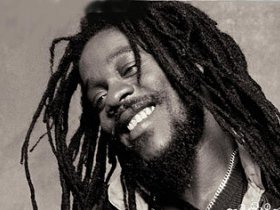

By the mid-1970s Dennis Brown had followed Bob Marley’s path to the Twelve Tribes of Israel church on Hope Road. The afro was replaced by dreadlocks; the soul ballads were “beefed up with a heavy dub bassline and the occasional rasta revolutionary lyrics,” the Guardian records. The album that crystallised the shift was Wolf and Leopards — later issued as Wolves and Leopards — recorded between 1976 and 1977 and released on Brown’s DEB label in the UK and Weed Beat in Jamaica.
Black Ark sessions
Several tracks were voiced and mixed at Lee “Scratch” Perry’s Black Ark studio, Wikipedia notes. “Wolf & Leopards,” which criticises criminals who posed as Rastafari as cover for their activities, was co-written by Brown, Winston “Niney” Holness and Perry. “Here I Come” — also known as “Love and Hate” — was, according to Holness, written when he was in his twenties; Holness also sang harmony vocals on it. The rhythms had been recorded at Randy’s studio before being voiced at the Black Ark. Steve Barrow and Peter Dalton’s Rough Guide to Reggae calls the set “a benchmark album for the roots era,” AllMusic agrees: it was the first LP to feature Brown as a full-fledged Rastaman, with a strong commitment to cultural themes.
The signature tune
“Here I Come (With Love and Not Hatred)” became Brown’s signature song — the tune, the Guardian wrote, “that was to become Brown’s signature.” The album also carries “Whip Them Jah Jah,” “Created by the Father,” “Emanuel” and “Children of Israel.” It was among the last material Brown recorded with Niney before moving on to work almost exclusively with Joe Gibbs from 1977 to 1983, the National Library of Jamaica records.
Why it matters
Wolves and Leopards was essentially a collection of singles, but it functions as a fully integrated album — a watermark release signalling Brown’s shift to political and cultural matters and his emergence as a mature, fully developed artist. The lovers-rock balladeer had become a roots reggae force.
Listen and dig deeper
- Play Wolves and Leopards in the Listen library, and browse Dennis Brown.
- Previously: The Crown Prince of Reggae. Next: Visions of Dennis Brown (1978).
Sources: The Guardian — “Dennis Brown” (Dotun Adebayo, Jul 2, 1999); Wikipedia — Wolf & Leopards; AllMusic — Wolf & Leopards review; Roots Archives — Wolf And Leopards (1976–77); National Library of Jamaica — Dennis Brown exhibition.
Editor’s note: This entry is part of the JamaicansMusic online museum — a career timeline assembled from the archive. It is dated to the era it documents; every claim is drawn from the linked sources.